Our Which Type of Powder Coating Is Best for Your Project?
Choosing the best powder coat for a specific project is about more than just selecting your favorite color — each type of powder coating can have a big impact on factors like performance, durability and even cost. At Shawh. we understand that selecting a coating that is fit-for-purpose to match your application will provide you with an optimum performance, return on investment and life span. From colored and clear directions, to types of powder coatings we hope this guide will make it easier to mark a decision if you’re struggling with which type might work better for your project.
What Is Powder Coating?
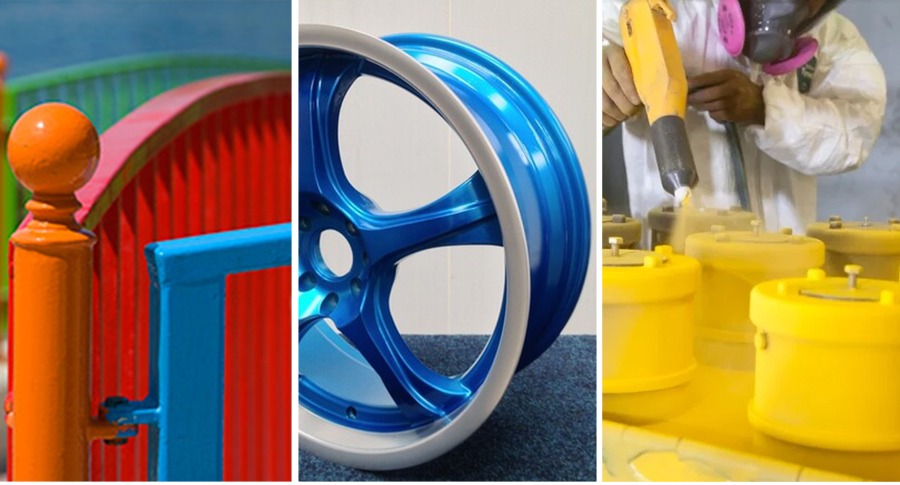
Powder coating is a type of coating that is applied as a free-flowing, dry powder by electrostatic means and then cured under heat to allow it to flow and form a “skin”. What you get is a smooth, hard finish that’s more durable than standard paint.
There are various types of powder coatings, largely classified by how they cure (thermosets versus thermoplastics).
Major Types of Powder Coating
Here are the common powder coating types, their strengths, limitations, and ideal use cases:
1. Epoxy Powder Coating
Pros:
- Excellent chemical resistance.
- Great adhesion to metal.
- Very good corrosion protection.
Cons:
- Limited UV stability — develops “chalk” when exposed to sunlight.
- Not quite as good for outside unless it has a top coat or shield.
Best For:
- Indoor use: machinery, Inside piping, , battery case or where chemical resistance is required.
- Primer coats for parts that are going to have a UV-resistent topcoat. The best of both worlds, according to Powder Coated Tough Magazine, is a UV resistant top coat applied over an epoxy primer.
2. Polyester Powder Coating
Pros:
- Outstanding weather ability, UV resistance, color retention.
- Durable in outdoor environments.
- Flexible finish, good impact resistance.
- Available in a number of gloss levels and colors.
Cons:
- Less chemical resistant than epoxy.
- Other types (e.g.Urethane / polyester) have higher baking temperature requirements and a thicker film build restrictions.
Best For:
- And outdoor structures: furniture, fencing, architectural aluminum (windows, frames).
- Products for consumers that must withstand the elements: lawn equipment, lighting fixtures.
Subtypes:
- TGIC-Polyester: TGIC (triglycidyl isocyanurate) hardener, ideal for outside applications.
- 24-ounce Super-Durable Polyester: Improved UV and weather performance; Ideal for extended outdoor use.
3. Epoxy-Polyester Hybrid (Hybrid)
Pros:
- Offers the best of both worlds; epoxy (chemical resistance) and polyester (weather resistance).
- More resistant to UV chalking than regular epoxy.
- May be used to create a polished finish.
- Frequently lower in price than ultra high performance resins.
Cons:
- UV is not as stable as 100% polyester.
- Some chemical resistance (not as good as pure epoxy).
Best For:
- Indoor furniture, appliances covers, toolboxes.
- Decoration applications, in which load bearing is a concern.
4. Polyurethane Powder Coating
Pros:
- Superb UV resistance and weather ability.
- Good chemical and corrosion resistance.
- Can produce high-gloss, premium finishes.
Cons:
- Higher temperature curing usually necessary, not suitable for all substrates.
- Thicker coats can be difficult (“orange peel” effect) when too much is applied.
Best For:
- Ornamental designs, architectural trims, garden furniture.
- Applications where good looks and outdoor resistance is at stake.
5. Acrylic Powder Coating
Pros:
- Excellent gloss and color retention.
- Decent for UV resistance; typically utilized as a clear top coat.
- Flexible, impact-resistant finish.
Cons:
- Generally limited to thinner films.
- Not all that great for high corrosion or chemical.
Best For:
- Top coats over the basecoat powders.
- Finishes that determine the aesthetic levels of appearance in decorative surfaces.
6. Thermoplastic Powder Coatings
These are distinct from thermosets as discussed above, because they do not chemically crosslink – in other words, by melting and re-solidifying with heat.
Typical thermoplastics include:
- Nylon (Polyamide): Very abrasion resistant, low friction. Utilized in machine and plant engineering, industrial parts, gears, lab stuff.
- PVC: Good flexibility, flame resistance and dielectric loss factor.
- Polyethylene/Polypropylene: Very good chemical stability; for pipes, tanks, cable insulation.
Best For:
- Applications for which a thick, tough coating is desired.
- Chemical exposure or wearing environment.
- Reparable parts (can be re-melted to recover thermoplastics).
Choose The Right Powder Coating For Your Project
Here’s a decision-making template for thinking this through:
1. Determine the Environment & Exposure
- Low Level of UV Indoor → Epoxy or Hybrid
- Outdoor / exposed to sun → Polyester, Super-durable Polyester, Polyurethane
- Severe weather or architectural → Super-durable Polyester or Polyurethane
2 Evaluate Performance Needs
- Chemical / Corrosion resistance → Epoxy, Hybrid, Polyurethane
- Power / Wear resistance → Thermoplast like Nylon
- Looks & Aesthetic Finish → Acrylic, Polyurethane
3. Check Substrate Compatibility
- Mild steel/iron → 95 % of powders will suit this.
- Aluminium or die cast → Must have powders with good adherence + cure suitable.
- Low or sensitive melting substrates → Use powders with lower cure temperature
4. Factor in the Curing Needs & Process Limitations
- How many of animal fat and what’s the capacity on your bake oven?
- How thick of a coating do you require? (A specific chemistry may be required for thicker coatings.)
- Is overbaking a risk? (Some resins degrade if overbaked.)
5. Cost vs Durability Trade-off
- 100% Epoxy is also pretty affordable and now comes in just about any color but will need a UV-resistant topcoat
- Super-durable polyesters and polyurethanes are more expensive but last longer outside
Real-World Examples (Use Cases)
- Outdoor Furniture / Fence: Polyester powder coating shall be applied for its weather stability and UV resistance.
- Plant Machinery: Epoxy coating for the great chemical resistance in enclosures.
- Building Metal Frames / Windows: super-durable polyester or polyurethane for color and long term durability.
- Decorative Metal Panels: Acrylic or hybrid for a smooth finishing effect and good looks.
- Piping or Transport Lines: For durable, outer-armored protection against crushing of thermoplastic (such as nylon) coverage.
Key Takeaways
- There’s no one-size-fits-all in the world of powder coating — different powders work better for some applications and environments than others.
- Epoxy if you need chemical resistance, polyesters if your parts will be outdoors and hybrids in between.
- For high UV and weather durability in high-end finishes, polyurethane/super-durable polyester is typically the route.
- Thermoplastic Powders are best for toughness and reworkability.
- Whatever kind of powder, make sure that matches both your process (oven temperature, part geometry) and your pocket!
Conclusion
Shawh GV is considered as one of the best wholesalers for AkzoNobel providing high-quality powder coatings which are ideal for a wide variety of applications. Setting the standard for quality, Shawh GV makes sure that their products are of serious quality and durability. They have the full assortment of AkzoNobel powder coatings, also custom finishes – at very good prices. Whether it be industrial or architectural applications, Shawh GV is committed to provide you with reliable and economical solutions for all your coating requirements.